Why Installment Sales Are the Norm in Pakistan's E-Bike Market
Most e-bike buyers in Pakistan aren't paying full price upfront. Between rising unit costs and a market still building trust in electric two-wheelers, 6, 12, and 24-month installment plans are how the majority of dealerships actually close sales. That's good for volume — but it turns every dealership into a small-scale lender, with all the collections work that implies.
The problem isn't the installment model itself. It's tracking dozens or hundreds of active payment plans by hand, across different customers, different start dates, and different amounts, without anything automatically telling you who's overdue today.
The Real Cost of Manually Tracked EMIs
When installment schedules live in a register or a spreadsheet, three things tend to happen:
- Payment due dates get missed internally — not because the customer refused to pay, but because nobody flagged the date.
- Late fees are applied inconsistently, or not at all, because someone has to remember to calculate and add them manually.
- By the time a payment is far enough overdue to notice, the customer has often already mentally "written off" the relationship, making collection harder.
None of this is a customer problem. It's a visibility problem — and it compounds every month you add new installment customers on top of the ones you're already tracking manually.
What Good Installment Tracking Software Actually Does
Not every POS or accounting tool handles installments well. Here's what a system built for e-bike dealerships should include.
Automated Payment Schedules
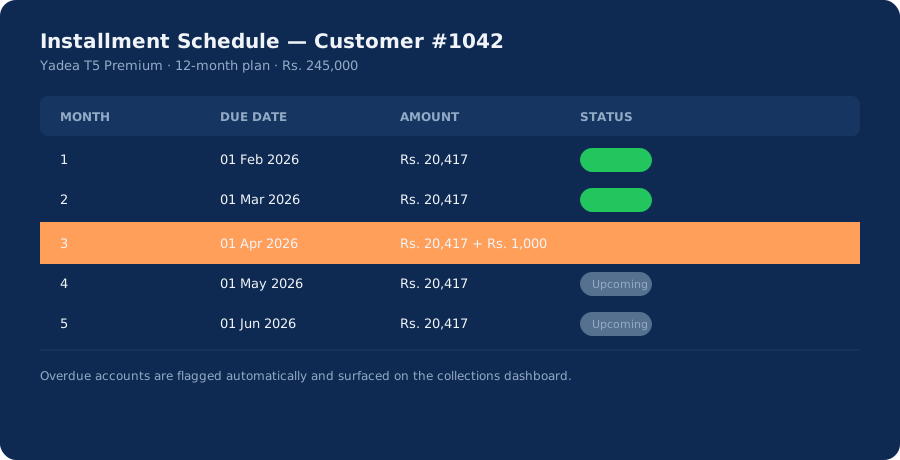
The moment a sale is finalized as an installment plan, the system should generate the full month-by-month schedule — principal, markup, and due dates — without anyone building it manually in a spreadsheet.
Late Fee Enforcement
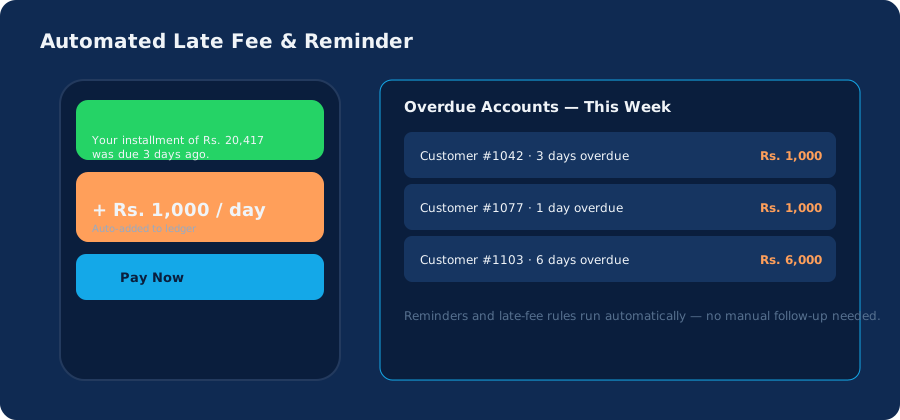
A fixed daily or per-instance late fee should apply automatically once a due date passes, consistently, every time — removing the awkward judgment call of whether to charge a regular customer a fee.
Customer Payment History at a Glance
Any staff member should be able to pull up a customer's full payment history — what's paid, what's due, what's overdue — in seconds, rather than digging through paper files when a customer calls or walks in.
Ledger-Linked Collections
Every installment payment received should post directly into your accounting ledger, so your cash position and outstanding receivables are always accurate without a separate reconciliation step at month-end.
How to Reduce Missed EMI Payments: A Practical Checklist
- Move every active installment plan into a system that tracks due dates automatically — not a notebook or a general spreadsheet.
- Set a consistent, automatic late fee policy and apply it without exception, so customers know what to expect.
- Review an "overdue accounts" list daily or weekly, rather than waiting for customers to fall silent.
- Send payment reminders a few days before the due date, not just after it's missed.
- Keep installment records linked to your accounting ledger so collections and cash flow reporting stay in sync automatically.
Frequently Asked Questions
What installment terms do e-bike dealers in Pakistan typically offer?
6, 12, and 24-month plans are common, with the specific terms varying by dealership and the price point of the vehicle. Longer terms generally require more disciplined tracking, since more payment cycles are active at once.
Can installment tracking software calculate late fees automatically?
Yes — a dedicated e-bike ERP system can apply a fixed late fee (for example, a set amount per day overdue) automatically once a due date passes, without manual calculation.
Does installment software replace the need for a collections process?
No — it removes the guesswork from *when* to follow up, but a person still needs to make the call or send the message. The software's job is making sure nothing overdue goes unnoticed.
Is installment tracking included in general accounting software?
Rarely in a way built for vehicle dealerships. Generic accounting tools can record a payment, but few generate full amortization schedules, apply automatic late fees, or link installment status back to a specific VIN-tracked unit the way dedicated e-bike ERP software does.